IDTS Meaning: What Does IDTS Stand For and How Do You Use It?
IDTS meaning explained — learn what this popular internet slang stands for, where it came from, how to use it correctly, and when to avoid it.
Author
Super Admin
Published
6/3/2026
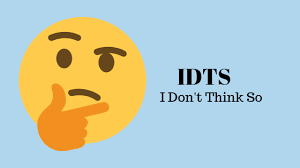
If you have been scrolling through text messages or social media and stumbled across the acronym IDTS, you are not alone. Internet slang moves fast, and it can feel like a full-time job keeping up with the latest shorthand. The good news is that IDTS meaning is straightforward once you know it — and by the end of this post, you will know exactly what it means, where it came from, and how to use it like a native.
In this guide, we will cover the full IDTS meaning, common usage examples, related slang terms, and a few situations where you should probably leave it out of your vocabulary.
What Does IDTS Mean? The Simple Answer
IDTS stands for "I Don't Think So." It is an internet acronym used to express doubt, mild disagreement, or a polite refusal. Think of it as the digital version of shaking your head — a casual, low-effort way to say you are skeptical about something or do not agree.
The acronym is most common in text messages, direct messages on platforms like Instagram and Snapchat, and comment sections on social media. It carries a relaxed, conversational tone and is rarely used in formal settings.
Quick Answer: IDTS meaning = "I Don't Think So" — used to express doubt or disagreement in casual online conversations.
Where Did IDTS Come From? A Brief History
Like most internet acronyms, IDTS grew out of the need for faster, more efficient communication online. In the early days of texting and instant messaging, character limits and slow typing speeds pushed users toward abbreviations. Phrases like "I don't think so" got compressed into shorthand that could be fired off in seconds.
IDTS became especially popular during the rise of SMS culture in the late 2000s and gained wider traction as smartphone messaging apps took over. Today it sits alongside other well-known acronyms like LOL, IDK, and IMO as part of the everyday digital vocabulary for younger generations.
How to Use IDTS in a Sentence
Everyday Usage Examples
Understanding IDTS meaning is one thing — knowing how to actually use it is another. Here are a few real-world examples that show the acronym in action:
• Friend: "Do you think he likes me?" You: "Idts, he barely said two words to you."
• Group chat: "Are we still going out tonight?" Reply: "Idts, it's raining really hard."
• Comment section: "Is this song going to hit number one?" Reply: "Idts lol."
• Text message: "Can you finish all that food?" Reply: "Idts, it's a huge portion."
Notice that IDTS is typically written in lowercase in casual chats. All-caps (IDTS) can feel more emphatic or serious, similar to the way typing in caps is often read as shouting.
Tone and Context Matter
IDTS is generally gentle and conversational. It is not aggressive or confrontational — it simply signals mild skepticism. That said, tone can shift depending on context. Paired with a laughing emoji, it reads as playful. Used alone in response to a serious question, it might feel blunt. Pay attention to what surrounds it.
IDTS vs. Similar Acronyms: What is the Difference?
Internet slang is full of overlapping terms. Here is a quick breakdown of how IDTS compares to a few related acronyms you might come across:
• IDK (I Don't Know) — Expresses uncertainty, not disagreement. "IDK if she is coming" is different from "IDTS she is coming."
• IDC (I Don't Care) — Signals indifference rather than doubt or refusal.
• IMO / IMHO (In My Opinion / In My Humble Opinion) — Used to share a personal view, often paired with a statement rather than used as a standalone response.
• NGL (Not Gonna Lie) — Often used to introduce an honest or unexpected opinion, rather than to express disagreement.
The key difference with IDTS is that it specifically communicates "I disagree" or "I doubt that" — it is directional in a way that IDK or IDC are not.
When Should You Use IDTS and When Should You Avoid It?
Great Situations for IDTS
IDTS fits naturally in informal conversations where brevity and ease are valued. Use it when:
• You want to express quick, low-drama disagreement in a group chat.
• Responding to a casual question where a long explanation is unnecessary.
• Commenting on social media posts in a lighthearted way.
• Texting friends or family who are already familiar with internet slang.
When to Skip It
Like all slang, IDTS has its limits. Avoid it in situations such as:
• Work emails or professional messages — it can come across as unprofessional or unclear to older colleagues.
• Serious conversations where tone and clarity matter — shorthand can feel dismissive.
• Communicating with people who are not familiar with internet slang, which could cause confusion.
A good rule of thumb: if you would not say the abbreviation out loud in that context, do not type it either.
Other Less Common Meanings of IDTS
In most cases, IDTS meaning refers to "I Don't Think So" and that is the interpretation you should default to. However, like many acronyms, IDTS can occasionally stand for something else depending on the field or platform:
• In some technical and software development contexts, IDTS appears as an abbreviation for Integrated Data and Telecommunications System.
• In certain gaming communities, it may be used as a tag or abbreviation for a specific team, clan, or server name.
For everyday social media and texting purposes, though, IDTS meaning is almost always "I Don't Think So." Context will usually make the intended meaning clear.
Frequently Asked Questions About IDTS Meaning
Q: Is IDTS rude to use?
Not inherently. IDTS is a neutral to mildly negative response — it expresses doubt or disagreement without aggression. Like most communication, whether it comes across as rude depends heavily on tone, context, and your relationship with the person. In a friendly text exchange, it is perfectly fine.
Q: Can IDTS be used sarcastically?
Absolutely. Sarcasm thrives in internet slang. If someone says "I am definitely getting 10 hours of sleep tonight" and you reply "idts lol," the humour is clear. The meaning technically stays the same — you do not think so — but the intent becomes playful rather than serious.
Q: Is IDTS used more by a specific age group?
IDTS is most commonly used by teenagers and young adults who grew up during the texting and social media era. That said, internet slang has blurred generational lines considerably, and plenty of adults in their 30s and 40s use it comfortably too.
Q: How do you pronounce IDTS?
You do not, really — IDTS is almost exclusively written, not spoken out loud. In conversation, people would simply say the full phrase: "I don't think so." The acronym exists to save time while typing.
Q: Are there regional variations in IDTS meaning?
Not significantly. Because internet slang spreads globally through platforms like TikTok, Instagram, and Twitter, acronyms like IDTS carry pretty consistent meaning across English-speaking regions. The interpretation of "I Don't Think So" holds up whether you are in the US, UK, Australia, or Canada.
Final Thoughts: IDTS Is Simpler Than You Think
Now that you know the IDTS meaning, you can confidently decode it whenever it pops up in your messages or feed — and use it yourself when the moment calls for a quick, casual pushback. At its core, IDTS is just a shorthand way of saying "I don't think so," and it fits right into the fast-paced, low-effort style of modern digital conversation.
Internet slang is always evolving, but the fundamentals stay the same: context is everything, and knowing your audience matters. Use IDTS with friends, keep it out of your work inbox, and you will be just fine.
Found this helpful? Share it with a friend who is still puzzling over internet slang — or drop your own favourite acronyms in the comments below. And if you want to keep up with the latest digital language trends, bookmark this page for future reference.