Dentiloquent: Meaning, Origin, and How to Use This Rare Word in Everyday English
Learn the meaning of dentiloquent, its origin, pronunciation, and how to use this rare word in clear, everyday English writing.
Author
Super Admin
Published
4/20/2026
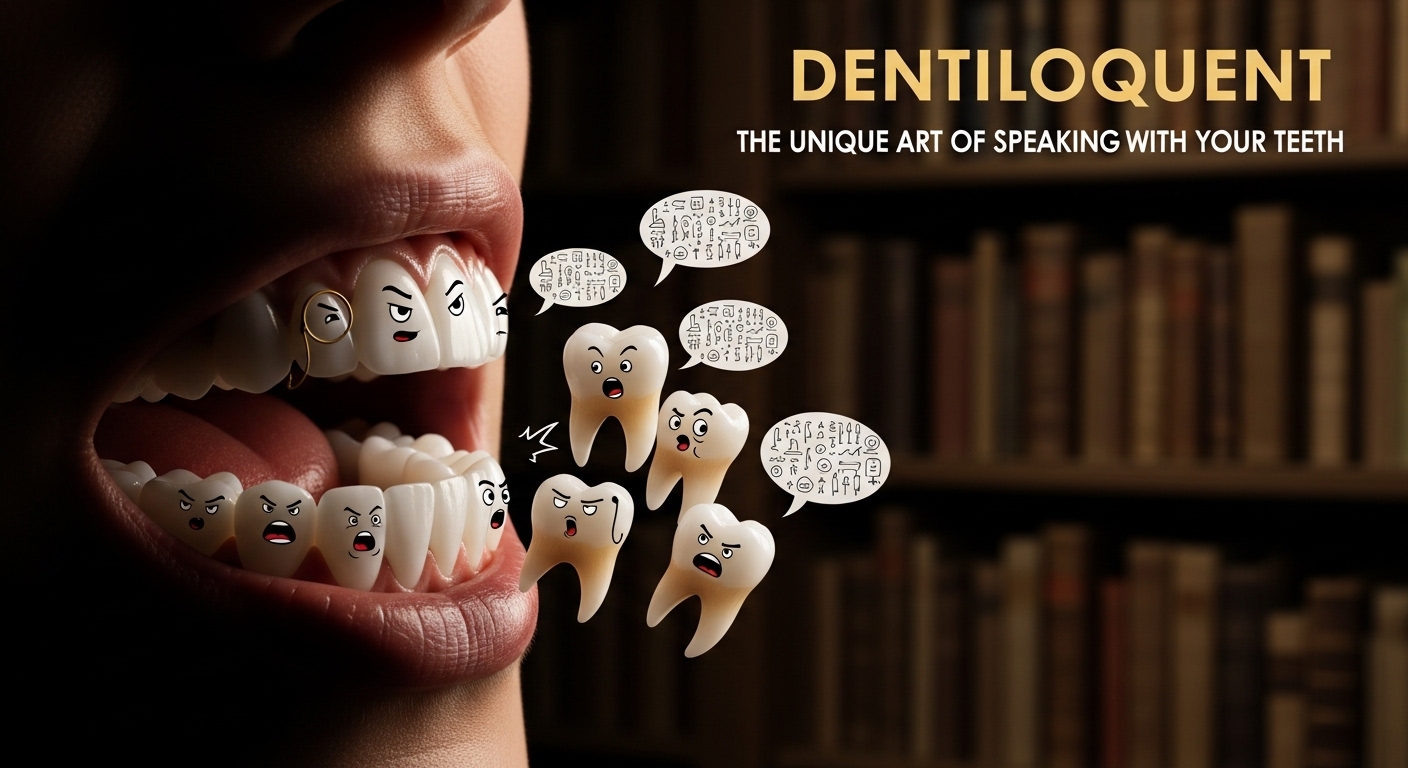
The word dentiloquent is a rare yet fascinating term that adds depth and precision to the English language. If you are exploring the dentiloquent meaning, you will discover that it refers to speaking through clenched teeth, often showing hidden anger or tension. While not commonly used in everyday American English, this word still appears in literature and advanced writing.
Understanding the dentiloquent definition can help improve your vocabulary and make your descriptions more vivid. Many writers use dentiloquent to express emotions indirectly, which makes it valuable in storytelling. Learning how to use dentiloquent correctly can enhance both your writing style and overall communication skills naturally.
The Origins and Etymology of Dentiloquent
To fully understand dentiloquent, it helps to explore where the word comes from. The term has roots in Latin, which is common for many complex English words. It is formed from two Latin parts: “dens,” which means tooth, and “loqui,” which means to speak. When combined, these parts literally mean “to speak with the teeth.”
Historically, dentiloquent appeared in older forms of English, especially in formal writing and scholarly texts. It was never widely used in everyday conversation, even in the past. Over time, the English language shifted toward simpler and more direct expressions, especially in the United States, where clear and practical communication is preferred.
The decline in the use of dentiloquent can be linked to a broader trend in modern English. Writers and speakers often choose clarity over complexity. While dentiloquent is precise, it is also unfamiliar to most readers, which limits its use in daily communication.
When and How to Use Dentiloquent in a Sentence
Knowing how to use dentiloquent correctly is important if you want to include it in your writing. The word is best used in descriptive contexts, especially when you want to show emotion rather than just state it.
Here is a table that shows different ways dentiloquent can be used in sentences
Context Example Sentence
Emotional tension He gave a dentiloquent reply, barely hiding his anger.
Argument scene She spoke in a dentiloquent tone, trying to stay calm.
Storytelling The character’s dentiloquent speech revealed his inner conflict.
Dentiloquent works best in writing such as novels, essays, or detailed descriptions. It adds a layer of depth that simpler phrases may notconversations. If you use it in everyday speech, people may not understand what you mean.
Writers should also avoid overusing dentiloquent. Because it is rare, using it too often can make writing feel unnatural. A good rule is to use it only when it adds clear value to your sentence.
Dentiloquent in Literature and Modern Writing
Although dentiloquent is not common, it still has a place in literature. Writers who enjoy using rich and varied vocabulary may include it to create a strong emotional effect. In classic literature, similar descriptive words were more common, as authors often aimed for detailed and expressive language.
In modern writing, dentiloquent can still be useful, especially in creative fields like fiction and storytelling. It can help show a character’s emotional state without directly stating it. For example, instead of saying a character is angry, describing their speech as dentiloquent allows readers to feel that anger more clearly.
Rare words like dentiloquent continue to matter because they expand the possibilities of language. They allow writers to be more precise and creative, even if they are not used every day.
Is Dentiloquent a Real Word?
A common question people ask is whether dentiloquent is actually a real word. The answer is yes, dentiloquent is a valid English word. It appears in some dictionaries, although it is marked as rare or uncommon.
In terms of frequency, dentiloquent is used very rarely in American English. Most people will never encounter it in daily life. However, it still exists as part of the language and can be used correctly in the right context.
The reason people search for dentiloquent often relates to curiosity. Many are interested in unusual or forgotten words, especially those that can improve writing skills or make communication more expressive.
Dentiloquent vs Similar Rare Words
Dentiloquent is sometimes compared with other uncommon words, but it has a very specific meaning. Words like “taciturn” describe someone who speaks very little, while “murmurous” refers to soft or low sounds. Neither of these words captures the same idea as dentiloquent.
The key difference lies in the physical and emotional detail. Dentiloquent focuses on how the words are spoken, especially the tension in the speaker’s jaw. This makes it unique among similar vocabulary.
Understanding these differences helps improve your overall language skills. It allows you to choose the most accurate word for each situation.
FAQ’s
What does dentition mean?
Dentition refers to the development and arrangement of teeth in the mouth.
What is the definition of an odontologist?
An odontologist is a specialist who studies teeth, often in fields like dentistry or forensic science.
What is the meaning of somniloquent?
Somniloquent means talking in one’s sleep.
What does ineloquent mean?
Ineloquent describes someone who speaks in a dull, unclear, or unexpressive manner.
Conclusion
Dentiloquent is a fascinating word that shows how detailed and expressive the English language can be. Its meaning, “speaking through clenched teeth,” captures both physical action and emotional tension in a single term.
Although it is not commonly used in modern American English, dentiloquent still has value, especially in writing. It allows for precise and vivid descriptions that simpler words may not achieve.
Expanding your vocabulary with words like dentiloquent can improve your communication skills and make your writing more engaging. When used carefully and in the right context, it can add depth and originality to your work.